

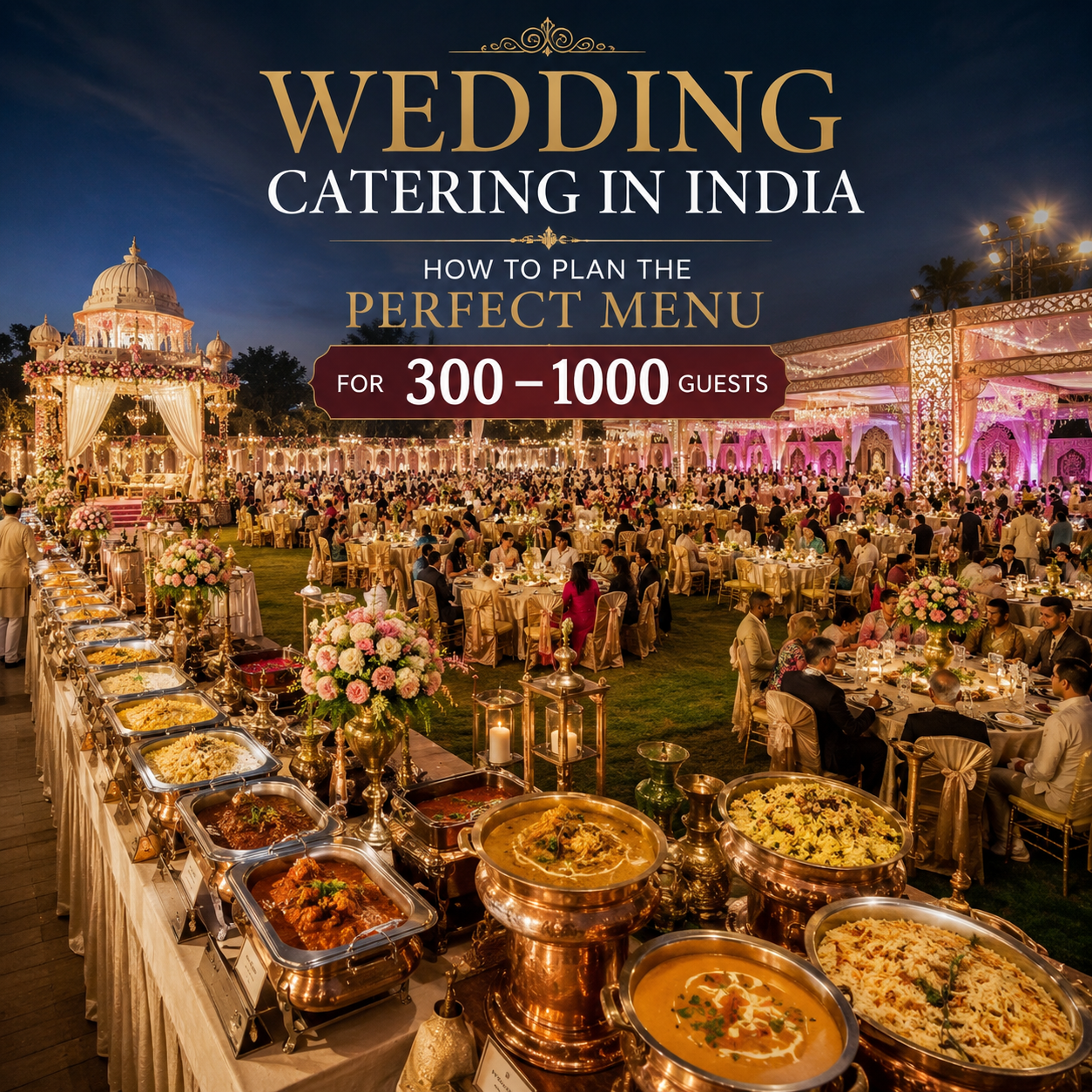
Ask any Indian wedding guest what they remember most — and nine times out of ten, the answer is the food. A stunning mandap and a beautiful bridal look will be photographed and praised, but it’s the menu that people talk about for years after.
Getting catering right for a large Indian wedding is one of the most complex logistical challenges in the entire planning process. Here’s everything you need to know.
How Much Does Wedding Catering Cost Per Plate in India?
Before planning your menu, you need a realistic sense of what catering actually costs. Pricing varies based on city, guest count, menu complexity, and service style.
Here’s a general breakdown for 2026:
- Budget (simple veg menu): ₹300–₹600 per plate
- Standard (veg + non-veg, proper crockery): ₹600–₹1,200 per plate
- Premium (live counters, multiple cuisines): ₹900–₹1,500 per plate
- Luxury (15+ items, celebrity chefs, international cuisines): ₹1,500–₹3,000+ per plate
One important thing to factor in: catering represents 30–40% of most Indian wedding budgets. That’s a significant chunk — and one that surprises many couples who focus too early on venue and decor.
Also note that costs per plate decrease as guest numbers increase — with bulk pricing kicking in for 300+ guests — but last-minute additions attract a 15–25% surcharge. Lock in your headcount early.
The Hidden Costs Couples Miss
The per-plate rate is just the starting point. Several add-ons can significantly push your total catering bill up:
- Live counters — Chaat stations, dosa counters, biryani live stations, pasta bars. Each counter adds ₹150–₹500 per guest depending on complexity.
- Staff charges — The more elaborate your service style, the more servers you need.
- Equipment & crockery — If the caterer brings their own, this is usually billed separately.
- GST — Typically 5–18% depending on the caterer’s turnover and registration.
- Wastage buffer — Caterers build in 5–10% extra food, which affects total billing.
Always ask for an all-inclusive quote and get clarity on what’s included before comparing rates across vendors.
What a Large Indian Wedding Menu Typically Looks Like
For a 300–1000 guest wedding across multiple events, your menu planning needs to cover several functions — each with its own food format and budget.
Mehendi / Haldi Keep it light and casual. Think finger foods, chaats, juices, and fresh snacks. A simple spread here saves budget for the bigger events.
Sangeet / Cocktail Evening This is where live counters shine. Popular setups include a chaat station, grills, mocktail and cocktail bars, and small plate bites. The pani puri counter is consistently the most crowded station at every Indian wedding function.
Wedding Ceremony Often a sit-down or semi-buffet lunch or dinner depending on muhurta timing. This typically has the most elaborate spread — multiple vegetarian and non-vegetarian mains, rice dishes, breads, and desserts.
Reception The largest and most social event. Multi-cuisine buffets with live counters work best for large guest counts. Dum biryani, paneer butter masala, and kulfi remain the most universally loved dishes at Indian wedding receptions.
Veg vs Non-Veg: Finding the Right Balance
One of the most sensitive catering decisions at Indian weddings is the vegetarian vs non-vegetarian ratio. A common approach that works well for mixed guest lists:
- A full vegetarian buffet as the primary spread
- A separate non-vegetarian counter (mutton, chicken, fish depending on community)
- Jain and allergen-friendly options clearly labelled
This setup respects dietary preferences across large, diverse guest lists without creating awkward moments at the food counter.
Smart Tips for Managing Catering at Scale
1. Book 4–6 months in advance Book 6–12 months ahead for popular wedding dates (November–February weekends). Last-minute bookings often cost 20–30% more.
2. Always do a tasting Never finalise a caterer without tasting the food first — especially for large guest counts where consistency across service matters enormously.
3. Give a realistic headcount A 10% over-estimation on 500 guests could cost ₹50,000–₹1,00,000 extra. Use your RSVP data carefully and account for typical no-show rates of 5–10%.
4. Choose seasonal ingredients Seasonal menu selection reduces ingredient costs by 15–20% and often results in fresher, better-tasting food.
5. Clarify the service model Buffet, semi-plated, or full-service plated dinners all come at different price points and require different numbers of staff. Choose based on your venue layout and event style.
Questions to Ask Your Caterer Before Signing
- Is the quote per plate or per event? What’s included?
- Do you handle large guest counts regularly? What’s your maximum capacity?
- Who will be on-site to supervise on the day?
- How do you handle last-minute changes to the headcount or menu?
- What’s your policy on leftover food?
A professional caterer will have clear, confident answers to all of these — and will be open to walking you through a tasting before you commit.
Final Thought
Great wedding catering isn’t just about the food — it’s about the experience. Warm, well-presented food served efficiently to 500+ guests without long queues or empty counters takes serious planning, the right vendor, and the right team on the ground.
Planning a wedding in Karnataka and need help finding the right catering partner? Talk to our team — vendor coordination including catering is one of our core services.

